Does Using a VPN Change Which Country’s Law Applies? A Complete Guide
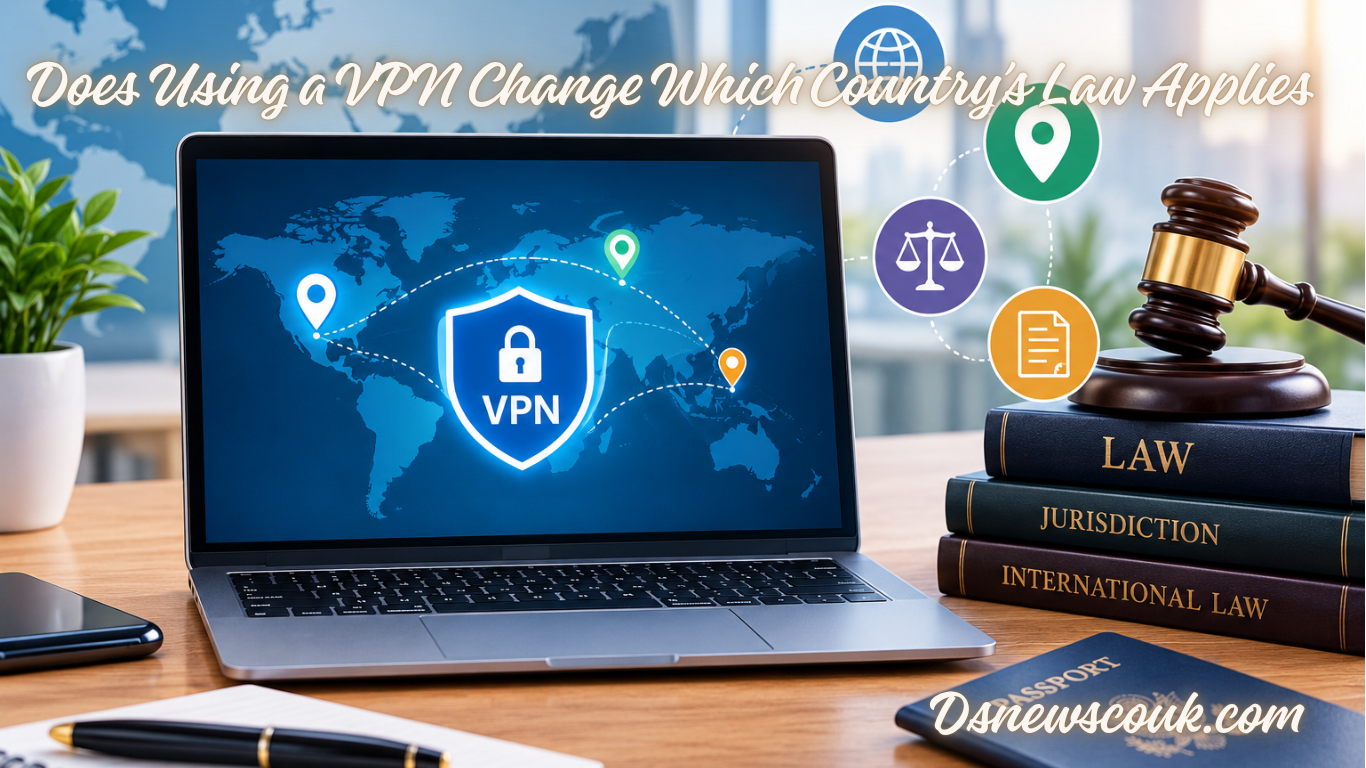
A virtual private network, or VPN, can change how a website sees your internet connection, but it usually does not change which country’s laws apply to you. This distinction is important because VPNs affect your apparent IP address and online routing, while legal jurisdiction depends on facts such as where you are physically located, where an event happened, where a company operates, where a contract was made, and what laws govern a particular activity.
For example, a person physically located in the United States can connect to a VPN server in another country. A website may then see an IP address associated with that country. That does not automatically make the person legally located there or place all of their online activity under that country’s laws.
The answer can become more complicated when online activity involves several countries. A user might live in one country, use a VPN server in a second country, access a website operated by a company in a third country, and interact with a person or business located in a fourth. Different legal rules may apply to different parts of the situation.
This guide explains how VPNs interact with jurisdiction, applicable law, privacy, contracts, online services, copyright, criminal law, government requests, and other legal issues from a United States perspective.
What Does a VPN Actually Change?
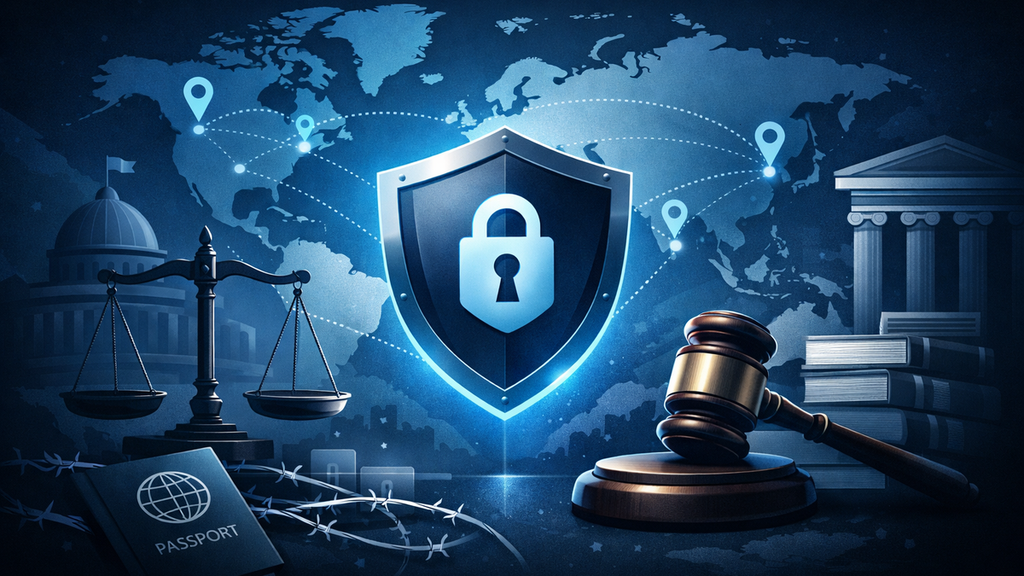
A VPN creates an encrypted connection between your device and a VPN server. Instead of websites directly seeing the public IP address assigned to your internet connection, they generally see the IP address of the VPN server.
This can change several aspects of your online experience.
A website may identify the VPN server as being in another city or country. Search results, available services, language settings, advertisements, and other location-based features may therefore change.
However, an IP address is only one piece of information used to determine a person’s location.
A website or service may also have access to information such as:
- Account registration details
- Billing information
- Shipping addresses
- Payment records
- Device information
- Browser information
- Cookies
- GPS or location permissions
- Previous account activity
- Communications records
- Login history
As a result, changing an IP address does not necessarily erase information about where a person actually lives or where an activity took place.
Does Using a VPN Change Which Country’s Law Applies?
Generally, no. Using a VPN does not automatically change the country whose law applies to your conduct.
The legal question is usually much broader than “What country does my IP address show?”
Courts and legal authorities can consider many connecting factors. Depending on the issue, these may include physical location, citizenship, residence, location of property, location of a business, place where an agreement was formed, location where harm occurred, and the terms of a contract.
Also Read: Does DSNews.co.uk Cover Technology Topics? A Complete Guide
A VPN server location can sometimes become one factual detail in a larger investigation, but it normally does not determine jurisdiction by itself.
Also Read: Does a UK Website Automatically Use UK Law for Every Visitor?
For instance, suppose someone is physically in California and connects through a VPN server in Germany. The person’s internet traffic may appear to originate from Germany to some websites. That does not automatically replace California or United States law with German law.
The same principle applies in reverse. Someone physically outside the United States does not necessarily become subject to all U.S. laws simply because their VPN connection uses a U.S. server.
Why IP Address and Legal Location Are Different
An IP address can provide information about an internet connection, but it is not a legal passport.
IP geolocation databases generally associate IP addresses with geographic areas. Their results can be useful for websites, fraud detection, advertising, and security systems, but they are not necessarily precise enough to establish a person’s physical location in every situation.
VPNs make this distinction even clearer.
If you connect to a VPN server in New York while sitting in Texas, a website could see a New York IP address. Your physical location has not changed.
This matters because laws generally regulate people, businesses, transactions, property, conduct, and other legally relevant events rather than simply regulating the geographic label attached to an IP address.
The key difference is:
- A VPN can change your apparent network location.
- A VPN does not normally change your physical location.
- A VPN does not automatically change your citizenship or residence.
- A VPN does not automatically change the location of a transaction.
- A VPN does not automatically change a contract’s governing law.
- A VPN does not automatically eliminate legal obligations.
How Jurisdiction Works With Online Activity
Jurisdiction is the legal authority of a court or government over a person, business, dispute, or particular matter.
Online activity can create complicated jurisdiction questions because the internet crosses borders easily.
Consider a simple example.
A person in Florida uses a VPN server in Canada to access a website operated by a company in California. The website’s servers might be located in another country, while its payment processor operates somewhere else.
There is no single rule saying that the VPN server’s country automatically controls the entire situation.
Instead, the applicable legal framework may depend on the specific dispute.
A court could need to consider questions such as:
- Where was the person located?
- Where did the relevant conduct occur?
- Where is the defendant located?
- Where did the alleged harm occur?
- What does the contract say?
- Which court has jurisdiction?
- Which country’s law governs the dispute?
- Are there special laws covering the particular activity?
These questions are separate, even though they can overlap.
Does a VPN Change Your Physical Location?
No.
A VPN can make your internet connection appear to originate from another location, but it does not physically move you.
This sounds obvious, but it has important legal consequences.
If you are physically present in a state or country, the laws that apply to people physically present there can still apply even if your internet connection appears to come from elsewhere.
For example, if a state law regulates conduct occurring within that state, routing your connection through another country does not necessarily remove you from that state’s legal jurisdiction.
This is one reason the phrase “VPN location” can be misleading. A VPN server has a location. Your device and your body have a physical location. Those two locations can be completely different.
Can a VPN Change the Law Governing a Contract?
Usually not by itself.
Contracts can contain governing-law and jurisdiction clauses. These provisions can state which law should govern certain disputes and where legal proceedings should take place, subject to applicable law and the ability of a court to enforce those provisions.
Imagine that a U.S. customer agrees to the terms of an online service. The company might be incorporated in another country, and the service might include a clause specifying the law governing the agreement.
Connecting through a VPN server in a different country does not normally rewrite that agreement.
The important documents are more likely to include:
- Terms of service
- User agreements
- Privacy policies
- Purchase agreements
- Licensing agreements
- Employment agreements
- Arbitration clauses
- Governing-law provisions
- Forum-selection provisions
A VPN can change how the connection appears to the service, but it does not normally change the words that the parties agreed to.
Can a VPN Change Which State Law Applies in the United States?
Not automatically.
The United States has federal law as well as state and local laws. Some legal questions are controlled primarily by federal law, while others involve state law.
A VPN cannot simply allow someone in California to declare that their online activity is governed by Nevada law because they connected through a Nevada VPN server.
State jurisdiction can depend on factors such as physical presence, residence, business activity, location of conduct, location of injury, contractual relationships, and other connections recognized by law.
Different areas of law can also use different tests.
Therefore, the answer to “Which state’s law applies?” cannot be determined from an IP address alone.
Does a VPN Make Online Activity Legally Anonymous?
No.
A VPN can improve privacy by hiding your ordinary public IP address from websites and by encrypting traffic between your device and the VPN server. But it does not guarantee anonymity.
A VPN provider may have technical information about connections, depending on its architecture and logging practices. Websites can also identify users through accounts, cookies, browser characteristics, payment information, device identifiers, and other methods.
Other parties may have relevant information as well.
For example, an online investigation could potentially involve records from:
- Internet service providers
- VPN providers
- Websites
- Cloud platforms
- Payment processors
- Mobile carriers
- Email providers
- Social media companies
- Employers
- Device logs
The amount of information available depends on the circumstances and the providers involved.
Can Authorities Still Investigate Someone Using a VPN?
A VPN does not make a person immune from investigation.
Depending on the jurisdiction and circumstances, authorities may use legally available evidence from multiple sources.
A VPN may make one particular source of information less useful, especially the user’s ordinary public IP address. But investigators do not necessarily rely on a single IP address.
Digital investigations can involve account records, communications, financial information, device evidence, witness information, service-provider records, and other evidence.
The precise rules for obtaining and using such information vary by jurisdiction and by the type of investigation.
Does the VPN Company’s Country Matter?
Yes, but it is only one part of the legal picture.
A VPN provider operates within a particular legal environment. Its company structure, offices, employees, infrastructure, and data storage arrangements may involve different countries.
The provider may also have contractual relationships with customers and data centers.
This can affect questions such as:
- What privacy laws apply to the provider?
- What information must the company retain?
- What information can it disclose?
- What legal process can authorities use?
- Where can the company be sued?
- Which country’s courts can issue orders against the company?
However, the provider’s country does not automatically determine which law applies to the VPN customer.
The customer and the provider can be subject to different legal rules.
Does a VPN Change Privacy Laws That Apply to You?
Not necessarily.
Privacy law can be particularly complicated because multiple jurisdictions may have connections to the same data processing activity.
A person’s location, the business’s location, the location of servers, the type of data involved, and the nature of the service can all matter.
For example, routing traffic through a server in a country with stronger privacy protections does not necessarily mean that every privacy law from that country now applies to the user.
It is better to think about privacy law as a question of legal relationships and data processing rather than simply server geography.
Can a VPN Change Copyright or Intellectual Property Rules?
A VPN does not generally remove copyright obligations.
Copyright law can involve the country where content was created, where it was distributed, where infringement allegedly occurred, where a service operates, and other connecting factors.
International copyright rules are also influenced by treaties and national laws.
Changing the apparent IP address does not automatically turn copyrighted material into public-domain material or create permission to use it.
The same general principle applies to trademarks, patents, trade secrets, and other forms of intellectual property.
The exact rules depend on the type of intellectual property and the jurisdictions involved.
Does a VPN Change Rules for Online Purchases?
A VPN can sometimes change what a website displays.
For example, an online retailer may use IP-based location information to determine:
- Currency
- Product availability
- Regional pricing
- Shipping options
- Taxes
- Language
- Store location
But the legal consequences of a purchase do not necessarily change just because the website sees a different IP address.
Taxes, consumer-protection laws, customs rules, payment rules, and contractual terms can depend on information other than IP location.
For a U.S. customer, the relevant state can sometimes depend on factors such as the customer’s address, delivery location, and applicable tax rules rather than the VPN server’s location.
Does a VPN Change Tax Laws?
A VPN generally does not change a person’s tax residence or eliminate tax obligations.
Tax law can depend on concepts such as residence, domicile, physical presence, income source, business activity, property location, and other legally defined factors.
Changing your IP address does not normally change those underlying facts.
For example, a U.S. resident cannot generally change their tax residence merely by connecting to a VPN server in another country.
Tax questions can become highly fact-specific, particularly for people who actually live or work across multiple countries.
In those situations, professional tax advice may be appropriate.
Can a VPN Change Where an Online Crime Occurs?
Not automatically.
For criminal law, the location of conduct can be important, but online offenses can cross borders.
A person might commit conduct in one jurisdiction that affects a victim in another jurisdiction and involves infrastructure in a third.
Authorities may therefore have jurisdiction based on different connections to the alleged offense.
A VPN server can be physically located in yet another country, but that does not necessarily move the underlying conduct there.
The precise jurisdictional rules depend heavily on the offense and the applicable law.
What Happens When Multiple Countries Have Laws That Apply?
This is where international online law becomes especially complicated.
It is possible for more than one country to have a legitimate legal connection to the same event.
For example:
- A user lives in the United States.
- A company is incorporated in Ireland.
- The company’s servers are located in Germany.
- A customer is located in France.
- The user connects through a VPN server in Canada.
Several countries may have some connection to the activity.
That does not mean all countries automatically apply every one of their laws to every part of the situation. Instead, courts and authorities may need to determine which jurisdiction has authority and which law governs the specific issue.
International legal systems use different rules for these questions, and treaties or agreements can also matter.
Why VPN Location Can Still Matter
Although a VPN does not automatically change the applicable law, the VPN’s location can still have practical effects.
Websites commonly use IP geolocation to make business or technical decisions.
A foreign IP address may cause a service to:
- Show different content
- Block access
- Require additional verification
- Display different prices
- Apply regional restrictions
- Detect unusual account activity
- Trigger fraud controls
- Offer different features
These are service-level consequences rather than automatic changes in the user’s legal status.
This distinction is useful because people often confuse “the website treats me as being in another country” with “the law treats me as being in another country.”
Those statements are not equivalent.
Does a VPN Let You Bypass Geographic Restrictions Legally?
The technical ability to access a service does not necessarily answer whether doing so is permitted.
A website may restrict access based on geographic location through its terms of service, licensing agreements, distribution rights, or other rules.
Using a VPN can sometimes make a connection appear to come from an allowed region.
Whether that violates a contract, licensing arrangement, or law depends on the particular circumstances.
Therefore, there are two separate questions:
- Can the VPN technically make the service think you are elsewhere?
- Are you legally or contractually permitted to use the service that way?
The first question is technical. The second is legal.
What Does “Applicable Law” Mean?
“Applicable law” means the law that legally governs a particular situation.
It is not necessarily the law of the country shown by your IP address.
Different parts of one online activity can potentially involve different legal rules.
For example, a contract might specify one country’s law, while mandatory consumer-protection rules from another jurisdiction may also be relevant. A privacy issue could involve another legal framework depending on the parties and data processing involved.
This is why legal disputes often require a detailed analysis of the facts rather than a simple geographic answer.
VPNs and Terms of Service
One of the most overlooked issues is the difference between law and private contracts.
A service’s terms of service may prohibit certain uses of VPNs or require users to provide accurate location information.
If a person accepts those terms, the question may become one of contract interpretation rather than simply asking which country’s law applies.
A service can also have separate policies for different regions.
Therefore, when using a VPN with an online service, it can be useful to check:
- The terms of service
- Regional restrictions
- Account requirements
- Location requirements
- Payment rules
- Licensing restrictions
- Fraud-prevention policies
A VPN changes the network path. It does not automatically change the contractual relationship.
Does a VPN Change Your Legal Residence?
No.
Legal residence, domicile, citizenship, immigration status, and physical location are separate concepts.
A VPN cannot make someone a resident of another country for legal purposes.
For example, someone living in Texas who connects through a VPN server in France does not thereby become a French resident.
Residence is determined under applicable legal rules and facts, not simply by the location of an IP address.
What About a VPN and Immigration Law?
A VPN does not change where a person physically is for immigration purposes.
If a person is physically present in the United States, using a VPN server in another country does not mean they have physically left the United States.
Similarly, connecting through a U.S. VPN server does not by itself establish that someone is physically inside the United States for immigration purposes.
Immigration rules can be highly specific, so people dealing with visas, entry requirements, work authorization, or immigration status should rely on the applicable government rules or qualified legal advice.
Common Misunderstandings About VPNs and Law
Several common assumptions can lead to confusion.
“My IP says another country, so that country’s law applies.”
Not necessarily. An IP address is only one fact among many.
“A foreign VPN means I am outside my country.”
No. Your physical location has not changed.
“A VPN makes me anonymous.”
Not completely. It can improve privacy, but many other forms of identification can remain.
“A VPN prevents authorities from identifying me.”
There is no general guarantee of that. Investigations can involve many types of evidence.
“The VPN provider’s country controls my legal obligations.”
Not automatically. Your relationship with the provider and the provider’s legal obligations are separate questions.
“A VPN overrides website terms.”
No. Technical access and contractual permission are different issues.
How to Use a VPN With Better Legal Awareness
For ordinary users, the safest approach is to understand what a VPN does and what it does not do.
A VPN can be useful for security on untrusted networks, reducing exposure of your normal IP address, and improving privacy in certain situations.
At the same time, users should avoid treating a VPN as a legal shield.
Before relying on a VPN for a location-sensitive activity, consider:
- Where you are physically located.
- What service you are using.
- What the service’s terms say.
- Whether the activity involves a regulated industry.
- Whether a contract specifies governing law.
- Whether multiple countries are involved.
- Whether taxes or licensing requirements may apply.
- Whether the activity involves sensitive personal information.
This simple checklist can prevent many misunderstandings.
How to Think About VPNs in Cross-Border Legal Disputes
A useful way to analyze a cross-border online dispute is to separate the technical facts from the legal facts.
Start with the technical facts.
Where was the VPN server? What IP address did the website see? Where were the relevant servers located?
Then look at the legal facts.
Also Read: Is DSNews.co.uk a News-Only Website? Complete Guide to Its Content
Where was each person located? Where were the companies based? Where did the transaction occur? Where did the alleged harm occur? What did the parties agree to?
Finally, identify the specific legal question.
Also Read: Does Reading DSNews.co.uk Automatically Make an American Subject to UK Laws?
Is the issue privacy, taxation, copyright, criminal law, consumer protection, contract law, employment law, or something else?
Different legal questions can produce different answers.
This approach is more reliable than asking only which country the VPN “shows.”
Does Using a VPN Change Which Country’s Law Applies? Key Takeaway
Using a VPN can change your apparent IP-based location, but it usually does not change the country or state whose law applies to your conduct.
The applicable law can depend on physical location, residence, citizenship, the location of a business or transaction, contractual terms, where harm occurred, the subject of the dispute, and jurisdictional rules.
A VPN therefore should be viewed primarily as a privacy and networking technology, not as a way to change legal jurisdiction.
If a particular legal dispute involves several countries, the answer can become highly fact-specific. In important situations involving criminal investigations, taxes, immigration, employment, regulated activities, or significant contracts, professional legal advice can be necessary.
Frequently Asked Questions
1. Can a VPN server location be used as evidence of where someone was?
A VPN server’s location generally shows where the VPN connection appeared to originate, not necessarily where the user physically was. Other evidence may be needed to establish a person’s actual location. The weight of a VPN-related record depends on the facts and the applicable rules of evidence.
2. Can two countries legally claim jurisdiction over the same online activity?
Yes, it is possible for more than one jurisdiction to have a legal connection to the same conduct or dispute. This does not necessarily mean both countries will apply all of their laws in the same way. Jurisdictional rules, conflicts-of-law principles, treaties, and the facts of the case can determine what happens.
3. Does turning off a VPN restore my original legal jurisdiction?
Turning off a VPN changes the network connection, not the underlying legal facts. If a person was physically located in a particular state or country before using the VPN, switching the VPN off does not create or remove legal jurisdiction. The same basic principle applies when turning the VPN on.
4. Can a company ban an account because it detects VPN use?
A company may have policies governing VPN use, location information, fraud prevention, or regional access. Whether it can suspend or terminate an account depends on its contractual terms and applicable law. A VPN user’s legal rights and a company’s internal account policies are separate questions.
5. Does using a VPN create a permanent record of the country shown by the VPN?
Not necessarily. Different services record different information, and retention periods vary. A website may record the VPN server’s IP address, while the VPN provider may maintain different types of technical information depending on its systems and policies. There is no universal rule that every VPN connection creates or retains a permanent country record.
Conclusion
A VPN can make your internet connection appear to come from another country, but that does not normally change which country’s law applies to you.
The difference between virtual location and legal location is the central point. Your IP address can change while your physical location, residence, contractual obligations, tax status, and other legal connections remain the same.
Online legal questions can also involve several jurisdictions at once. The location of a user, company, server, transaction, contract, or alleged harm may each matter differently depending on the legal issue.